A Warning for America’s Fuels and Convenience Retailers: EU Regulations and California’s Climate Rules Threaten U.S. Small Businesses
A major new risk is emerging for American businesses, not from market forces, but from foreign regulation. As the European Union moves forward with its Corporate Sustainability Due Diligence Directive (CSDDD), U.S. businesses, small and large, and across the fuels and franchise economy are facing a new form of regulatory exposure in the form of compliance obligations imposed indirectly through global supply chains. What appears on paper to be a European corporate governance rule is, in practice, a far-reaching extraterritorial intervention into how American companies invest, operate, and manage risk.
Under CSDDD, companies operating in the EU must document and verify environmental and human-rights practices across their entire global value chains. That extraterritorial reach and its requirements will inevitably flow downstream from U.S. suppliers operating in the EU to their fuels and convenience distributors, retailers, and franchisees, even though those businesses have no direct presence in Europe.
The economic implications are significant. New data in Harold Furchtgott-Roth’s recent paper,
“The EU’s December 2025 Changes to CS3D: Quantifying Costs to U.S. Industry,” finds that
Most of the U.S. businesses that will be impacted are structured for operational efficiency, not multinational compliance regimes. They lack the legal infrastructure, reporting systems, and verification capacity required by CSDDD. As EU-based suppliers push these obligations down the supply chain, American firms will face rising compliance costs, increased legal exposure, and greater uncertainty in contracting and investment decisions.
Regulatory uncertainty is not an abstract concern. It directly affects capital formation. When compliance obligations are unclear, duplicative, or extraterritorial, companies delay investment, scale back expansion, and reallocate capital away from productive assets toward legal and administrative overhead. For sectors such as fuels and franchising where operating margins can be precarious and infrastructure investment is capital-intensive, the consequences will be especially pronounced.
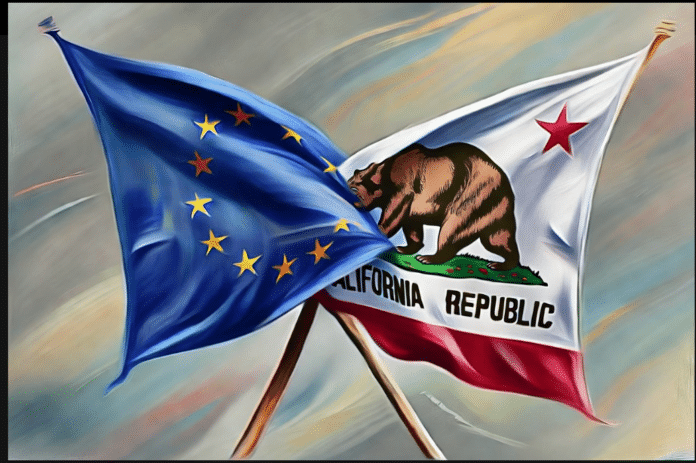
The problem is compounded by domestic regulatory pressures. California’s SB 253 and SB 261, though still under litigation, are advancing climate disclosure and risk-reporting requirements for companies doing business in the state. Combined with CSDDD, they create a fragmented, uncoordinated framework of obligations that imposes multiple layers of reporting on the same underlying activities. The result will not be better governance, but higher costs and distorted incentives.
Fuel and convenience retailers represent the last mile of America’s energy infrastructure. Along with many small business suppliers, they support freight, emergency services, rural mobility, and consumer access to affordable transportation fuels. Yet the cumulative effect of foreign and state-level mandates threatens to shift capital away from infrastructure investment and toward compliance expenditures, precisely the opposite of what a competitive free-market economy requires.
Congress is beginning to recognize the stakes. The Protect USA 2025 Act, introduced by Sen. Bill Hagerty and Rep. Scott Fitzgerald, would establish a clear boundary: foreign governments cannot impose reporting, auditing, or enforcement obligations on U.S. companies outside U.S. jurisdiction. This should not be seen as a rejection of sustainability goals, but a defense of economic sovereignty and rational regulatory design.
Europe itself is confronting the economic consequences of overregulation. Former Italian Prime Minister Mario Draghi’s competitiveness report warned that excessive regulatory burdens are undermining Europe’s growth and investment climate. The United States should not have to import those same constraints through global supply chains.
CSDDD implementation remains a couple of years away, but administrative costs and compliance demands will impact businesses much sooner. If unaddressed, the directive will disrupt supply chains and undermine the foundations of America’s energy, franchise, and small business sectors, all key drivers of U.S. economic growth.
For all of these U.S. businesses, this is not merely a compliance issue. It’s an operational expense and capital allocation challenge, and one that policymakers must comprehend and must not ignore.
Mike Roman
Senior Fellow, American Council for Capital Formation
Washington, D.C.